November 21, 2026
|
Lesedauer: 5 Minuten


Erhalten Sie sofortigen Zugriff auf eine TrueFoundry-Live-Umgebung. Stellen Sie Modelle bereit, leiten Sie den LLM-Verkehr weiter und erkunden Sie die gesamte Plattform — Ihre Sandbox ist in Sekundenschnelle einsatzbereit, ohne dass eine Kreditkarte erforderlich ist.



Unglaublich schnelle Methode zum Erstellen, Verfolgen und Bereitstellen Ihrer Modelle!
TrueFoundry AI Gateway bietet eine Latenz von ~3—4 ms, verarbeitet mehr als 350 RPS auf einer vCPU, skaliert problemlos horizontal und ist produktionsbereit, während LiteLM unter einer hohen Latenz leidet, mit moderaten RPS zu kämpfen hat, keine integrierte Skalierung hat und sich am besten für leichte Workloads oder Prototyp-Workloads eignet.
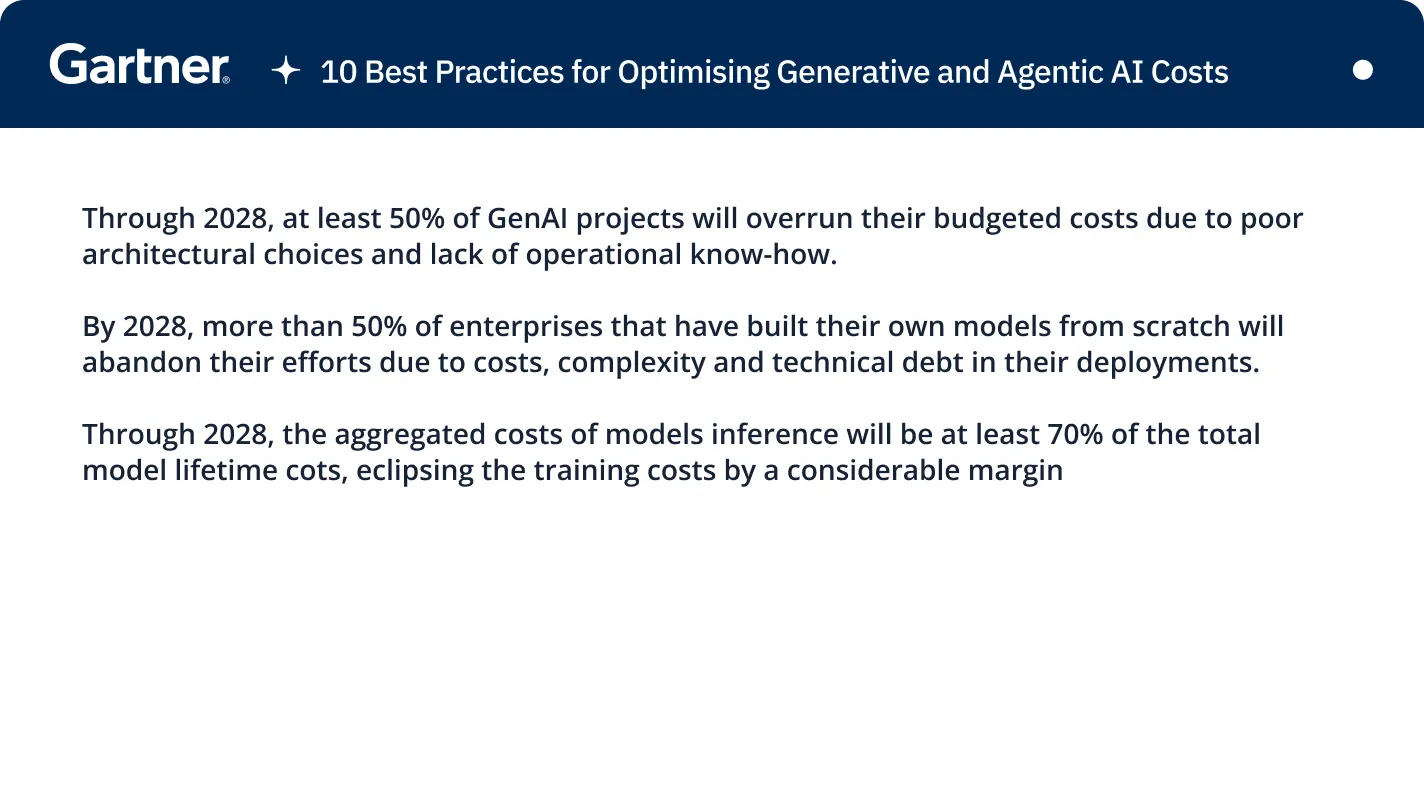


Separate Claude instances Claude Code spawns to handle a focused task in their own context window, with their own model and a restricted toolset. They do verbose work — tests, logs, docs — and return only a short summary, keeping the main session fast and cheap.
Define one as a small Markdown file in .claude/agents/ (project) or ~/.claude/agents/ (personal), with a name, a tight description, the tools it may use, and a model. Claude Code invokes it on a description match or when you name it explicitly; setting a cheap model such as Haiku on simple subagents is the key step, and /agents manages them.
Indirectly. They keep verbose output out of your main conversation — which you otherwise re-send on every turn — and can run on a cheaper model. They still consume tokens of their own, so the saving is the model choice and cleaner context, not the subagent being free.
Haiku for simple, high-volume jobs (tests, log triage), Sonnet for exploration and refactors, Opus only for genuinely hard reasoning. Always set it explicitly — an unset model inherits your session’s. The model field accepts haiku, sonnet, opus, fable, a full model ID, or inherit.
A subagent is a separate instance with its own context — best for volume or isolation. A skill is a reusable instruction set that loads on demand — best for repeatable know-how. An MCP server is an external tool or data source Claude calls — best for reaching live systems. They compose rather than compete.
Roughly seven times a standard session when teammates run in plan mode, because each maintains its own context window. Keep teams small, keep tasks self-contained, and shut teammates down when they finish.
Not from native billing alone across API keys and cloud providers. Routing Claude Code through an AI gateway resolves each request to a developer and meters spend per key, so subagent and agent-team usage shows up attributed rather than lumped into one number.
In .claude/agents/ for project-scoped subagents (version-controlled, shared with the team) and ~/.claude/agents/ for personal ones that follow you across projects. Organisation-managed settings override both — how a platform team standardises subagents across a fleet — and on name collisions the more specific scope wins.



Die neuesten Nachrichten, Artikel und Ressourcen werden in Ihren Posteingang gesendet