November 5, 2025
|
5 min read



Blazingly fast way to build, track and deploy your models!
Ask five platform engineers what an LLM gateway is and you'll get five slightly different answers. The short version: it's a layer that sits between your apps and the model providers they call, whether that's OpenAI, Anthropic, Google, Bedrock or something you host yourself. Every request goes through it. So instead of each team wiring up its own SDKs, keys and retry logic, you get one API, one place to set budgets and guardrails, and one log that tells you who called which model and what it cost.
Most teams don't go looking for a gateway. They end up needing one, usually after a rough week. A provider goes down for an hour and takes the support bot with it. Someone's test script loops over a weekend and quietly eats a month of budget. Or security asks for a list of every app sending customer data to an LLM, and nobody can answer.
All three of those problems happen in the same place: the request path. That's exactly where a gateway sits.
Calling a provider directly is fine when you have one app. It gets messy around the third or fourth, and a few things tend to break first.
Every provider speaks its own dialect. OpenAI, Anthropic, Bedrock and a vLLM server all format requests, errors and streaming a little differently, so each app ends up carrying its own adapter code.
Then there are the keys. They live in env files, CI secrets, a notebook someone forgot about. Rotating one turns into a scavenger hunt.
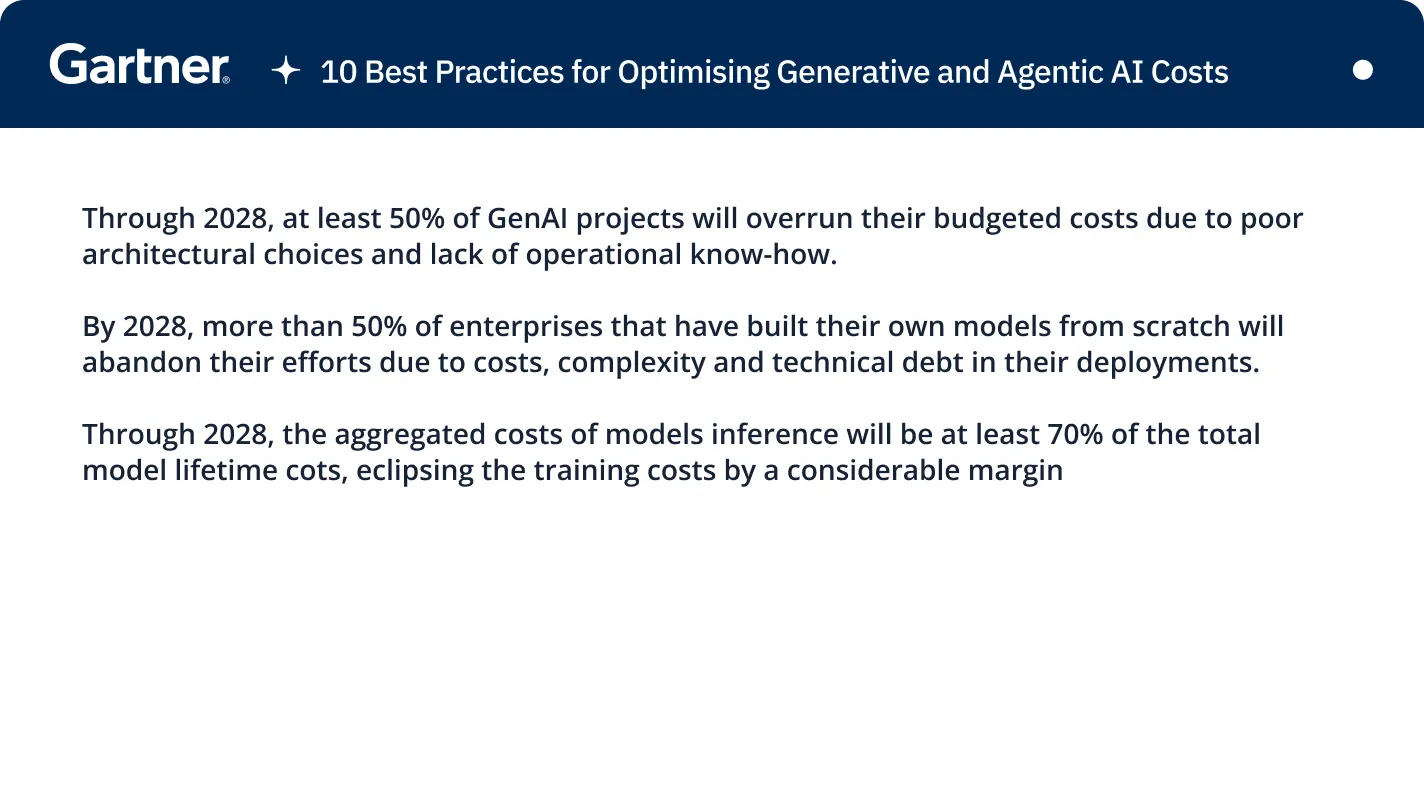
Cost is the one finance notices. The invoice is a single number. It won't tell you which team or feature spent it, and by the time it arrives, the money's already gone.
Outages hurt too. If your code calls one model directly, that model's bad hour is your bad hour, unless every team writes its own retry and fallback logic. Most don't.
And in a regulated industry, sooner or later someone will ask you to show what data went to which model. Logs scattered across ten services won't get you there.
You can't really fix any of this inside a single app. These are shared problems, so they need a shared layer.
Under the hood, the flow is fairly simple. A request comes in, gets checked, gets routed to a model, and gets logged on the way out. In a bit more detail:
For developers, switching over is usually a one-line change. Most gateways speak the OpenAI API, so you keep your existing SDK, point it at a different base URL, and pick models by name:
What about latency? A good gateway adds a few milliseconds, which disappears next to a model response that takes hundreds. In our own benchmark, TrueFoundry's gateway added about 3–4 ms and handled 350 requests per second on a single CPU core (full numbers here).
If you're comparing gateways, these are the things we'd check first. The first five matter for almost every production team; the rest depend on your setup.
People use these terms interchangeably, which causes real confusion on vendor calls. Roughly speaking, a proxy forwards traffic, a router chooses the model, an API gateway manages REST APIs, and an LLM gateway does the first two plus token-level control.
Want more depth? We've written separately about LLM proxies, AI gateways vs API gateways and MCP gateways vs proxies vs routers.
Not always, and it's worth saying that plainly. One app, one provider, a small bill? Call the provider directly and come back to this later. A gateway is one more piece of infrastructure, and it should earn its place.
It's probably time if a couple of these sound familiar:
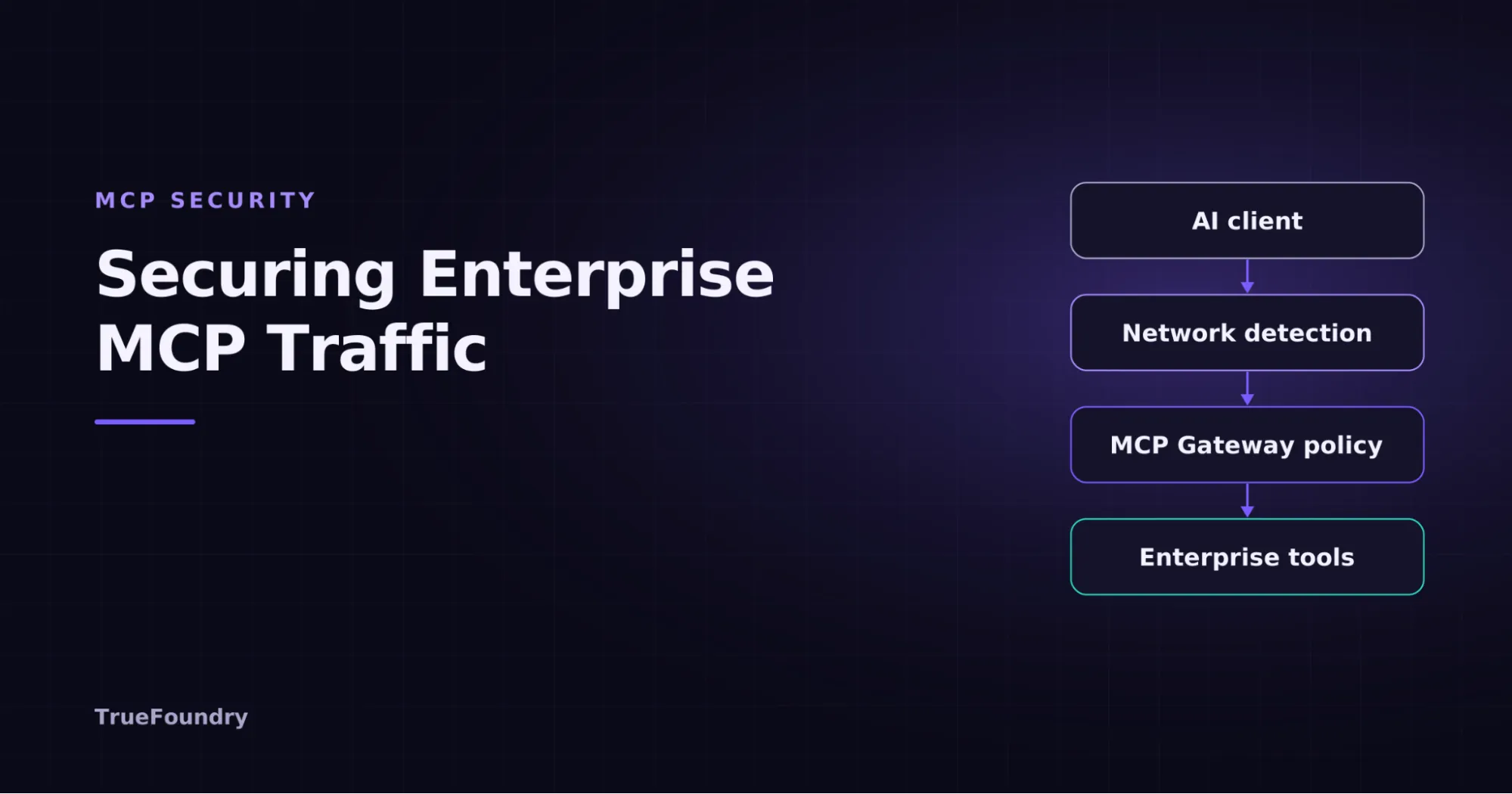
Here's what changed over the last year or so. Agents don't just call models anymore. They call tools, usually through the Model Context Protocol (MCP), and those tools are your CRM, your database, your ticketing system. Each of those calls needs the same treatment a model call gets: who's allowed, with which permissions, and a record of what happened.
So the category is stretching. When vendors say "AI gateway" now, they usually mean one control plane for three kinds of traffic: model calls, tool calls through an MCP gateway, and the agents themselves through an agent gateway, which handles agent identity, a shared registry and human approval for risky actions.
You can see the shift in the market, too. Gartner is putting out its first Magic Quadrant for AI gateways this year, and in April Palo Alto Networks said it would buy Portkey (our take on that deal). If you're choosing a gateway today, make sure it can grow into MCP and agent governance. Otherwise you'll probably be shopping again within a year.
Which one fits depends on what you care about most: running open source yourself, enterprise governance, or quick access to lots of models. Here's how we see the main options, trade-offs included:
For a longer comparison covering latency, pricing and enterprise features, see our best LLM gateways guide.
A few lessons that save a lot of pain later.
Start with whichever app is noisiest, the one with the biggest bill or the most incidents. A visible win there makes it far easier to bring other teams along.
Once apps have moved over, revoke the direct provider keys. A gateway people can route around doesn't govern anything.
Put budgets in on day one, for every team and environment. Adding limits after people are used to having none is a much harder conversation.
Give every production model a fallback from a different provider, and actually test the failover before you need it.
Finally, send traces to the tools your team already watches, like Datadog or Grafana, through OpenTelemetry instead of adding yet another dashboard.
An LLM gateway turns a pile of scattered model calls into something you can actually govern. If you run one small app, you can wait. Once several teams are shipping LLM features, or agents start touching company systems, the gateway is where cost control, reliability and security really get enforced. Just pick one that handles MCP tools and agents as well, because that's where the traffic is heading.
An LLM gateway handles calls to language models. An AI gateway covers those plus MCP tool calls and AI agents, all from one control plane. In practice, most LLM gateways are turning into AI gateways as agent traffic grows.
Not quite. A proxy mostly forwards requests to a provider. A gateway adds routing, fallbacks, budgets, guardrails, access control and full observability on top of that.
A little, yes. A well-built gateway adds a few milliseconds per request, which is tiny compared with model response times. TrueFoundry's adds about 3–4 ms.
Yes. You can self-host open-source options like LiteLLM, though you'll be the one maintaining and securing them. Enterprise gateways like TrueFoundry can also run entirely in your own VPC or on-prem, so prompts and logs never leave your environment.
Mainly three ways: it sends simple requests to cheaper models, caches repeated answers, and stops overspending before it happens through budgets. It also shows cost per team and app, so you finally know where the money goes.
Look for SSO through your identity provider, role-based access, scoped keys, PII masking, prompt-injection guardrails, a full audit trail, and the option to run it inside your own network. Our guide to what security teams need from an AI gateway goes deeper.
TrueFoundry AI Gateway delivers ~3–4 ms latency, handles 350+ RPS on 1 vCPU, scales horizontally with ease, and is production-ready, while LiteLLM suffers from high latency, struggles beyond moderate RPS, lacks built-in scaling, and is best for light or prototype workloads.




The latest news, articles, and resources sent to your inbox